
August 2026
Seeing Clearly at Night: Is Driving Becoming More Difficult?
Do headlights seem brighter than they used to? Are road signs harder to read after dark? Difficulty with night driving is one of the earliest signs that your vision may be changing.
Did you know? By age 60, your eyes typically receive only about one-third as much light as they did at age 20. As a result, many people need up to three times more light to see comfortably at night, making glare from headlights and dimly lit roads more challenging.
The most common cited findings are:
A 60-year-old’s retina receives only about one-third as much light as a 20- year-old’s retina. This is due to a combination of a smaller pupil (senile miosis) and the natural yellowing and reduced transparency of the crystalline lens. (NCBI)
Under dim-light (nighttime) conditions, a 60-year-old typically needs about three times more light than a 20-year-old to achieve comparable visual performance. (CDC Stacks)
These normal age-related changes explain why many adults begin to notice difficulty driving after dark in their 50s and 60s, even if they still have 20/20 visual acuity.
What this means for night driving:
Even with healthy eyes and no eye disease, older adults commonly experience:
Increased glare from oncoming headlights.
Slower adaptation when transitioning from bright to dark environments.
Reduced contrast sensitivity, making pedestrians, cyclists, and road hazards harder to detect.
More difficulty reading road signs at night.
Conditions such as cataracts, uncorrected vision changes, dry eye, or glare sensitivity can all make nighttime driving more challenging and reduce your confidence behind the wheel. Even if your daytime vision seems fine, reduced contrast sensitivity and increased glare at night can affect your ability to react quickly and safely.
A comprehensive eye examination can identify the cause of your symptoms and
determine whether updated glasses, treatment for dry eye, or cataract surgery may help improve your vision. If you’ve been avoiding driving at night or feel your vision isn’t as sharp after sunset, don’t ignore the signs. Talk to your Doctor about it today—clearer vision can help you stay safe and confident on the road.
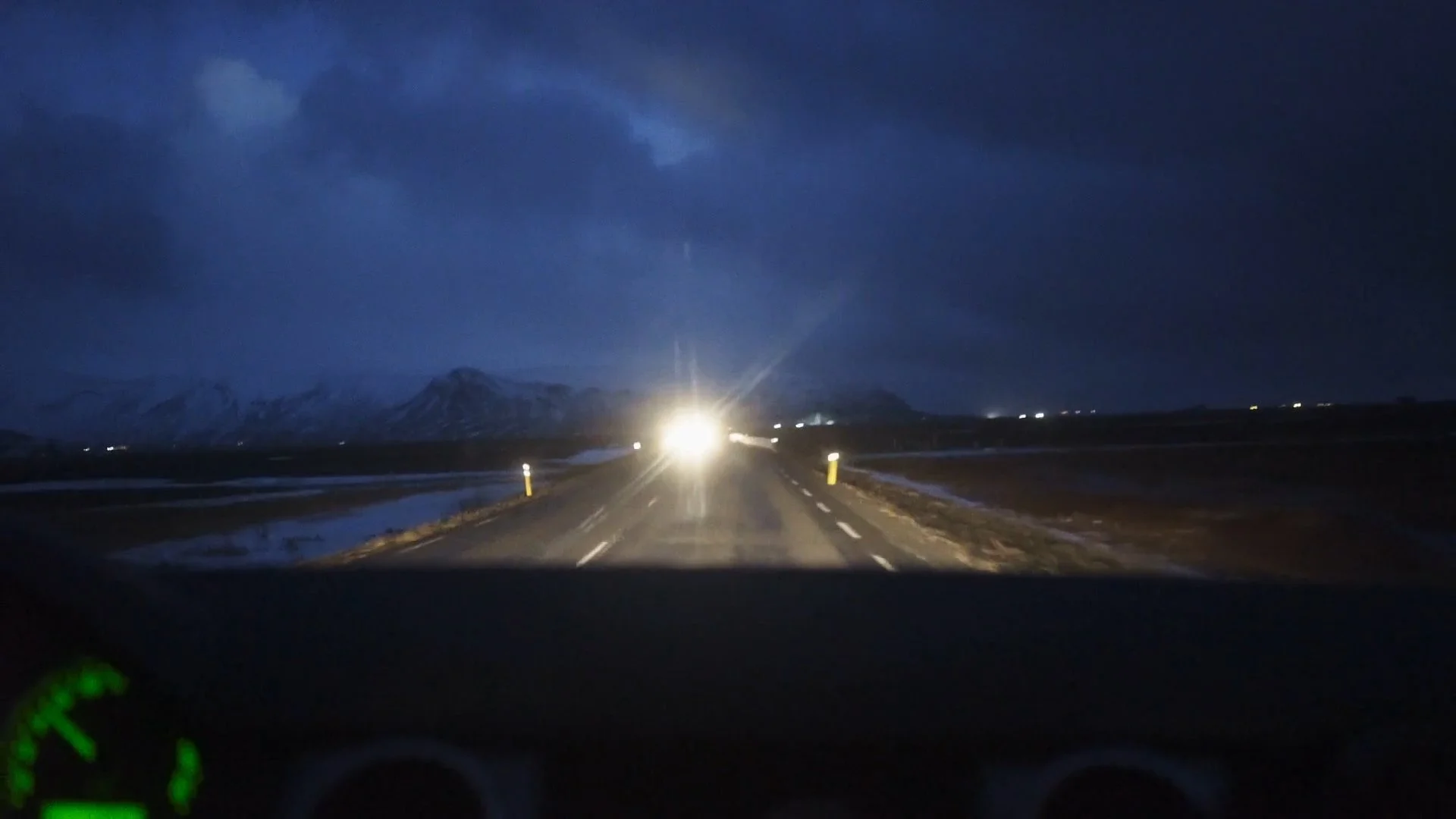
Difficulty with night driving is one of the earliest signs that your vision may be changing.
Digital eye strain has become one of the most common complaints seen in eye clinics.